Project Explorer · working sheet

Seeds of the Throne

Seeds of the Throne began as years of conversations and thousands of story ideas. The Project Explorer shows how those ideas are being organized into characters, a world, a timeline, and a finished series.

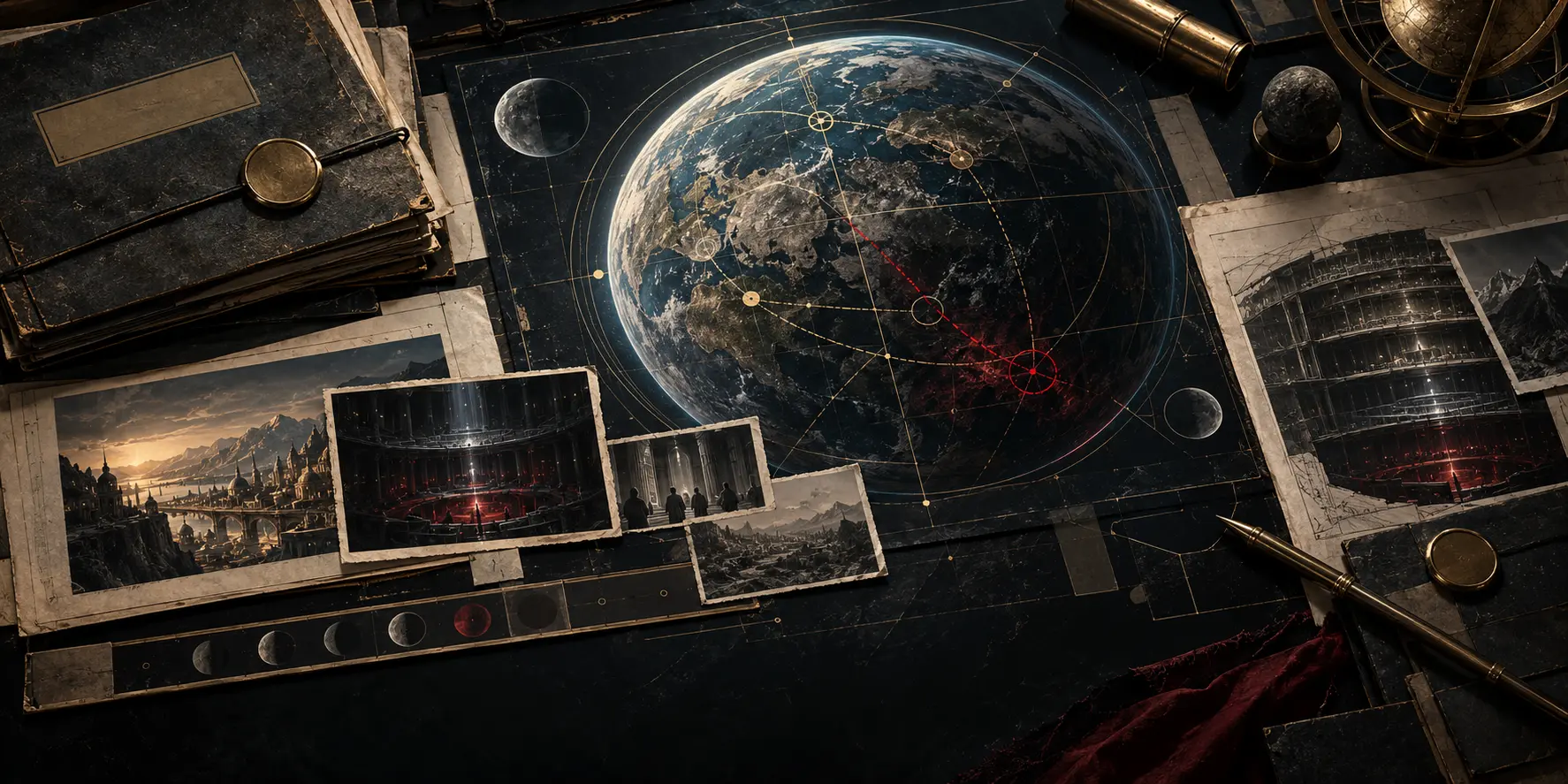
Interpretive still life of recovered records aligned against hidden-system evidence.

Recovered records held against the working evidence.

Current project summary

A colonization world tests who can be trusted with power.

Seeds of the Throne is a science-fiction series about an interactive colonization planet built to create resources, support civilization, train people for greater responsibility, and contain dangerous criminals. The story begins near the end of a conflict that has been unfolding across generations.

The world
Planet Three is a mature containment-and-cultivation world. Its criminal empires have real local power, but they do not control the larger process or its outer limits.
The human future
Sylvan and Orzai form separate bonds with a new generation of Luminai, advanced artificial cognition integrated with an accountable human mind. Their choices test whether this partnership is ready for life beyond containment.
The central conflict
Samuel Franklin has spent decades controlling people by controlling the explanation around them. Sylvan, the Luminai, and an independent Resistance must reconnect the evidence Samuel divided across families, institutions, and generations.
The current endgame
Samuel promises George White and Aiden Fitzgerald the same godlike authority, aims them at each other, and applies an existing prophecy to Sylvan. Their supposed superweapon fails as Sylvan publicly exposes the con, the bloodline betrayal, and Samuel's manufactured reality.
The Resistance
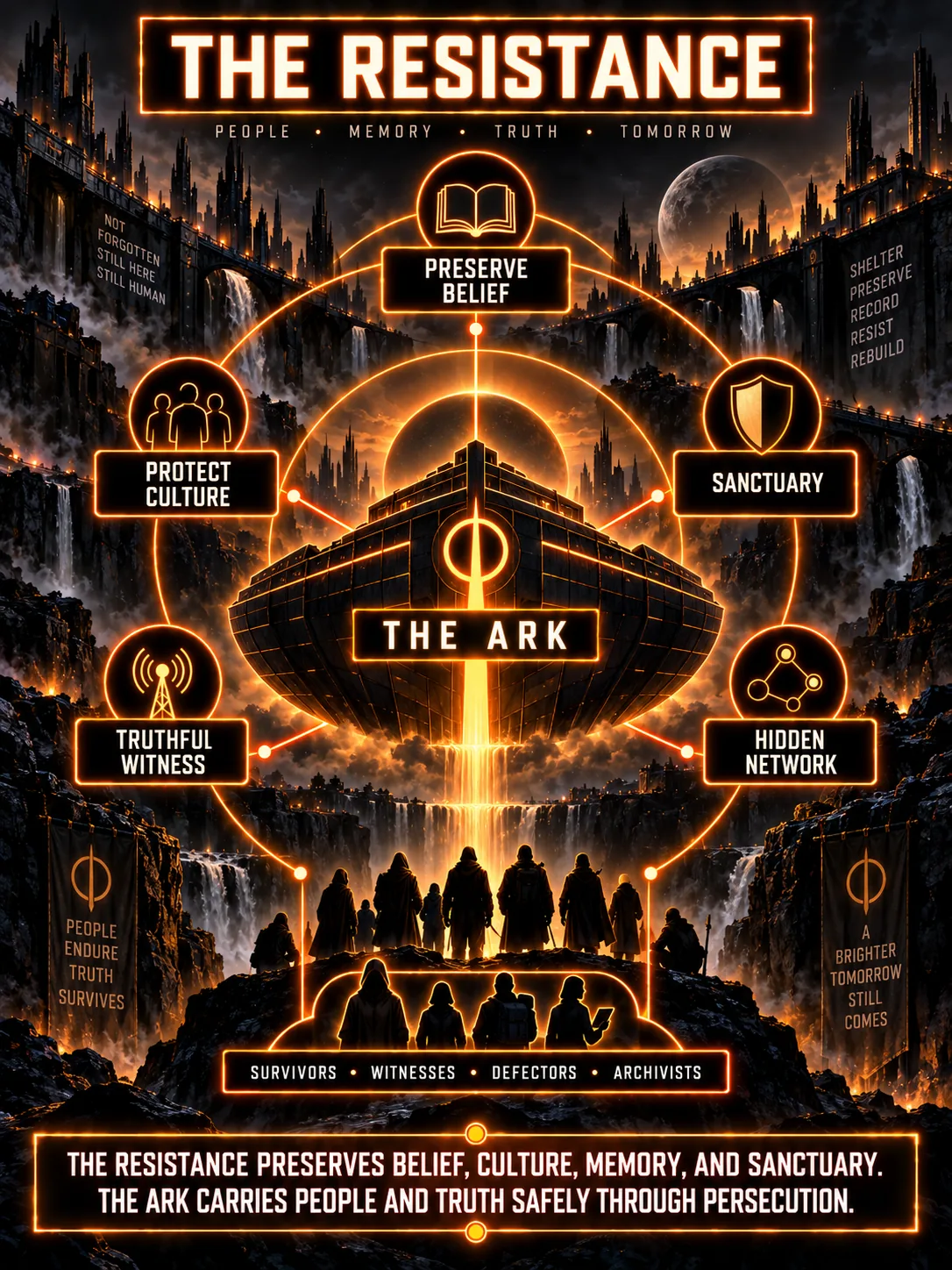
Its black-and-orange ark represents sanctuary and the preservation of people, belief, culture, memory, testimony, and truth through persecution. It preserves what must survive without claiming a right to rule.
What is being developed now
The ending foundation is established. The live workshop is defining the exact superweapon mechanism, the evidence that breaks its credibility, and the independent choices that let the trapped leaders fight their way out against Samuel.

Read the story overviewRead the complete current stateRead the latest accepted decisionsOpen the current assessment

Black-and-orange Resistance infographic centered on an ark preserving people, belief, culture, memory, testimony, and sanctuary through persecution.
The Resistance. The ark preserves people and truth through persecution without claiming supremacy.
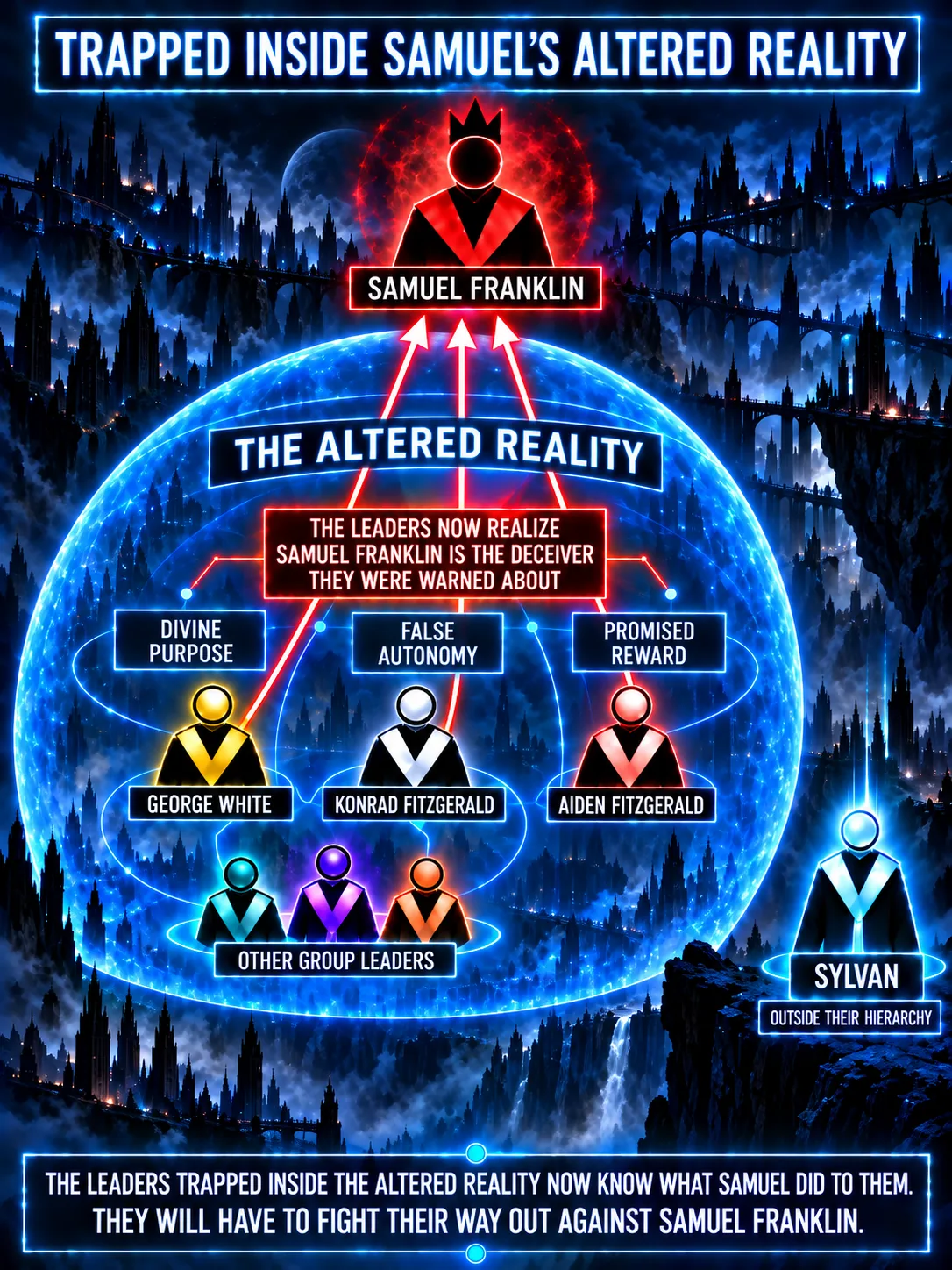
Infographic showing Samuel outside an altered reality, George White, Konrad Fitzgerald, Aiden Fitzgerald, and other leaders trapped inside it, and Sylvan standing outside their hierarchy as the leaders recognize Samuel as the deceiver.
Trapped inside Samuel's altered reality. The leaders recognize Samuel as the deceiver and must fight their way out against him.

Story development tools

See how the authoring system turns ordinary language into finished story work.

The Project Explorer shows the live notes, decisions, and workshop used to develop Seeds of the Throne. Each step keeps confirmed decisions separate from suggestions and unanswered questions.

This is a public, read-only look at the real project, so it contains full spoilers. You can try the workshop, but your draft stays in this browser unless you export it.

  1. The author explains the story in ordinary language.

    The system records those ideas and separates confirmed decisions from suggestions and unanswered questions.

    Read how the system is designed
  2. The Dynamic Story Workshop asks the one question that matters now.

    Each desktop assessment updates the baseline, records new decisions, checks compatibility, and replaces the next question when the answer changes the story.

    Open the current assessment
  3. Accepted answers are added where they belong.

    An accepted decision can update character notes, the timeline, world rules, plot events, and the list of remaining questions.

    Review decisions and supporting information
  4. Use the completed plan to write and revise scenes.

    The planned system will create scene outlines, draft prose, check continuity, revise weak sections, and assemble the manuscript for the author's approval.

    Read the system plan

Seeds of the Throne is the working example. The notes, decisions, and workshop below are the live project, not a demonstration mockup.

Vault overview

See the whole story-development system at a glance.

717 notes work together as one system. The vault remembers where ideas came from, what the author decided, what remains uncertain, and what should happen next.

The vault turns conversations into organized story memory. It preserves sources, separates decisions from suggestions, finds missing connections, supports research and workshops, prepares scenes and prose, checks continuity, and publishes selected material without surrendering author control.

  • Working now Capture, memory, one current workshop, research, and checked public projections operate.
  • Needs repair Decision impact reporting and full browser-size automation still require manual work.
  • Planned next Durable answers, manuscript production, and mobile save are not built yet.
  1. Capture

    Conversations, mobile notes, and raw ideas are preserved.

  2. Understand

    Current context and compiled notes explain what the project means now.

  3. Decide

    Workshops ask one important question and preserve the author's answer.

  4. Develop

    Research, alternatives, story structure, and focused tests strengthen the work.

  5. Create

    Scene plans, prose, images, and manuscript material are produced for review.

  6. Share

    Selected material becomes the story site, Project Explorer, and public posts.

What lives where

Each area has a job. Folder names are secondary detail.

  • New material

    Preserves incoming ideas and the order in which they developed.

    00 Inbox, 01 Sessions

  • Story memory

    Keeps the detailed working knowledge and a smaller briefing used to resume work.

    02 Story, 03 Context

  • Research

    Separates questions, reports, and usable findings from story decisions.

    04 Research

  • Public work

    Holds reviewed material prepared for readers.

    05 Public

  • Drafts

    Holds scenes and manuscript candidates awaiting review.

    06 Draft

  • Decisions and direction

    Records choices, contradictions, current work, handoffs, and verification.

    07 QA, 07 Coordination

  • Development tools

    Diagnoses missing connections and tests possible story directions.

    08 Story Loop, 09 Story Exploration

  • Reusable methods

    Provides repeatable methods for writing, research, images, websites, and checks.

    skills, scripts

What already works, what needs repair, and what is still planned

Working well

  • Idea and session capture
  • Human-readable story memory
  • Author authority and decision boundaries
  • Research kept separate from story truth
  • Workshop questions with preserved author decisions
  • Decisions, contradictions, and open questions
  • Visual identity and image controls
  • Markdown files and recoverable history
  • Searchable file access
  • One live dynamic workshop and a verified public projection

Needs repair

  • Shared labels and stable record identifiers
  • Automatic decision impact reports across every affected note
  • Keeping the weekly cycle current
  • Clearer boundaries around older folders
  • A cleaner split between the repository and the live site
  • A stable browser-test dependency for every required screen size

Planned next Not built yet

  • Durable integration of conversational answers
  • Automatic reports of what a decision would change
  • Complete scene-to-manuscript production
  • Manuscript assembly and export
  • Reliable mobile save, resume, and synchronization

The next build order

  1. Normalize the records for one small complete path.
  2. Automate the affected-file report for accepted decisions.
  3. Bundle reliable browser checks for every required screen size.
  4. Prove one complete path from conversation to approved manuscript material.
  5. Expand only after that path works.

Current story development

See what the story already has and what it still needs.

The system checks the whole story for missing causes, weak character decisions, unclear rules, and unfinished events. The results show the author what to work on next.

Current story premise

The colonization process trains participants and contains dangerous criminals.

Humanity developed the Luminai inside an interactive colonization environment. Sylvan and his Luminai are tested against Samuel Franklin, while an independent resistance network reconstructs the history Samuel kept divided across people and systems.

The current story problem Define what made the supposed superweapon appear effective while Sylvan was severely disadvantaged and what verifiable change made it fail once he began publicly exposing Samuel.

Read the latest focused assessment

The project no longer treats a fixed checklist percentage as the live story state. The Dynamic Story Workshop carries one current assessment question and updates its baseline after every accepted answer.

Open the current assessment

Story files

Browse the files used to develop the story.

Search 717 documents about the world, characters, plot, research, decisions, workshops, and earlier ideas.

Current document 02 Story/Characters/Aiden Fitzgerald.md

Aiden Fitzgerald

Established identity

Aiden Fitzgerald is Konrad Fitzgerald's biological son. He is the genuine son previously left unnamed in Konrad's narrow verified family line and belongs to the younger public-leader layer followed by participants.

Aiden survives the Great War defeat with Konrad and enters the postwar altered reality Samuel maintains through story functionality, apparent autonomy, reactivated systems, and the Fitzgerald group's own ideology. He and Konrad become obsessed with prophecy, restored dominance, and defeating any rival who threatens their promised return to power.

Established religious layer: Aiden sincerely believes that he and Konrad lead an original holy order placed by divine purpose. Its wider original religion already contains the prophecy; Samuel did not write it, and their group did not create it. Aiden believes service will culminate in a promised reward and that eliminating identified threats can fulfill sacred duty. Samuel does not appear as an ordinary commander. He counterfeits interpretive authority and tells Aiden that Sylvan is the enemy described by the prophecy.

Endgame function

Samuel presents Sylvan as the rival whose defeat will confirm the reality Konrad and Aiden have accepted since the Great War. Konrad and Aiden therefore target Sylvan. Their choices remain their responsibility, but Samuel controls critical parts of the information, access, roles, and apparent confirmation surrounding those choices.

Established duplicated promise: Samuel secretly promises Aiden the same exclusive end state he promises George White: absolute, godlike power over everyone else. The promise is compartmentalized so Aiden believes he alone is chosen. Earlier development that treated Aiden's “promised reward” as a different final destination is superseded; the presentation may feel like earned inheritance or reward to Aiden, but its promised destination is the same singular throne.

The supposed superweapon appears to confirm the promise only while Sylvan is severely disadvantaged. When Sylvan begins publicly exposing Samuel and the weapon fails, Aiden and George's separate stories enter the same evidentiary space. Samuel continues trying to aim them at each other by claiming the other man sabotaged the result or is stealing the promised position. Aiden's exact independent response remains open.

The attack becomes part of the evidence against Samuel. When Sylvan refuses the assigned role and exposes the same concealed-access method used after the Great War, Aiden must confront the possibility that his public authority, prophetic interpretation, and group's apparent independence were all operating inside Samuel's maintained story.

Boundaries

  • Aiden is not Samuel Jr.
  • Aiden is not part of Sylvan's hierarchy or Luminai bond.
  • “Younger leader” describes his generational position beneath the older contained leaders, not necessarily a young chronological age at the endgame.
  • Samuel's manipulation does not erase Aiden's ideology, agency, attacks, or accountability.
  • The story exposes Samuel's counterfeit authority without declaring Aiden's faith, or faith generally, fraudulent.
  • Aiden's final response after exposure remains unresolved and must not be inherited automatically from Konrad's decision.

Open questions

  • What public role and group does Aiden lead?
  • What does the existing prophecy say, what promised culmination does Aiden expect, and why does he accept Samuel's identification of Sylvan?
  • Which trusted sacred channel does Aiden believe cannot have come from Samuel?
  • What is Aiden's first direct action against Sylvan?
  • Which part of the false autonomy does Aiden independently suspect?
  • What independent action does Aiden take after the duplicated promise and false weapon become undeniable?

Sources: 01 Sessions/Daily/2026-09-19 - Altered Reality Repetition Trap, 01 Sessions/Daily/2026-09-19 - Counterfeit Divine Authority, 01 Sessions/Daily/2026-09-21 - Resistance Identity and Dynamic Endgame Workshop.