Document metadata
type: workshop-layer
status: deprecated-as-active
title: Causal chain and presentation mechanics
gate: What exact sequence turns separate discoveries into irreversible action without inventing missing canon?
prerequisites: EG-03, EG-04, EG-05, EG-06, EG-08, EG-12
Reveal Chain Mechanics Workshop
[!IMPORTANT] Historical workshop record. Its unresolved questions have been folded into Dynamic Story Workshop, the only active assessment surface. Do not update this file as a parallel workshop.
Purpose
Add a final workshop layer beneath the reveal-chain architecture. These questions preserve author control over the causal, timeline, presentation, succession, empire, disclosure, evidence, and motivation mechanics still missing from the endgame.
A. Causal mechanics
- What is the first fact Samuel Jr. learns that makes “heir” and “instrument” mutually incompatible rather than merely suspicious?
- What action does he take because of that realization, and what new fact is exposed only because he acts?
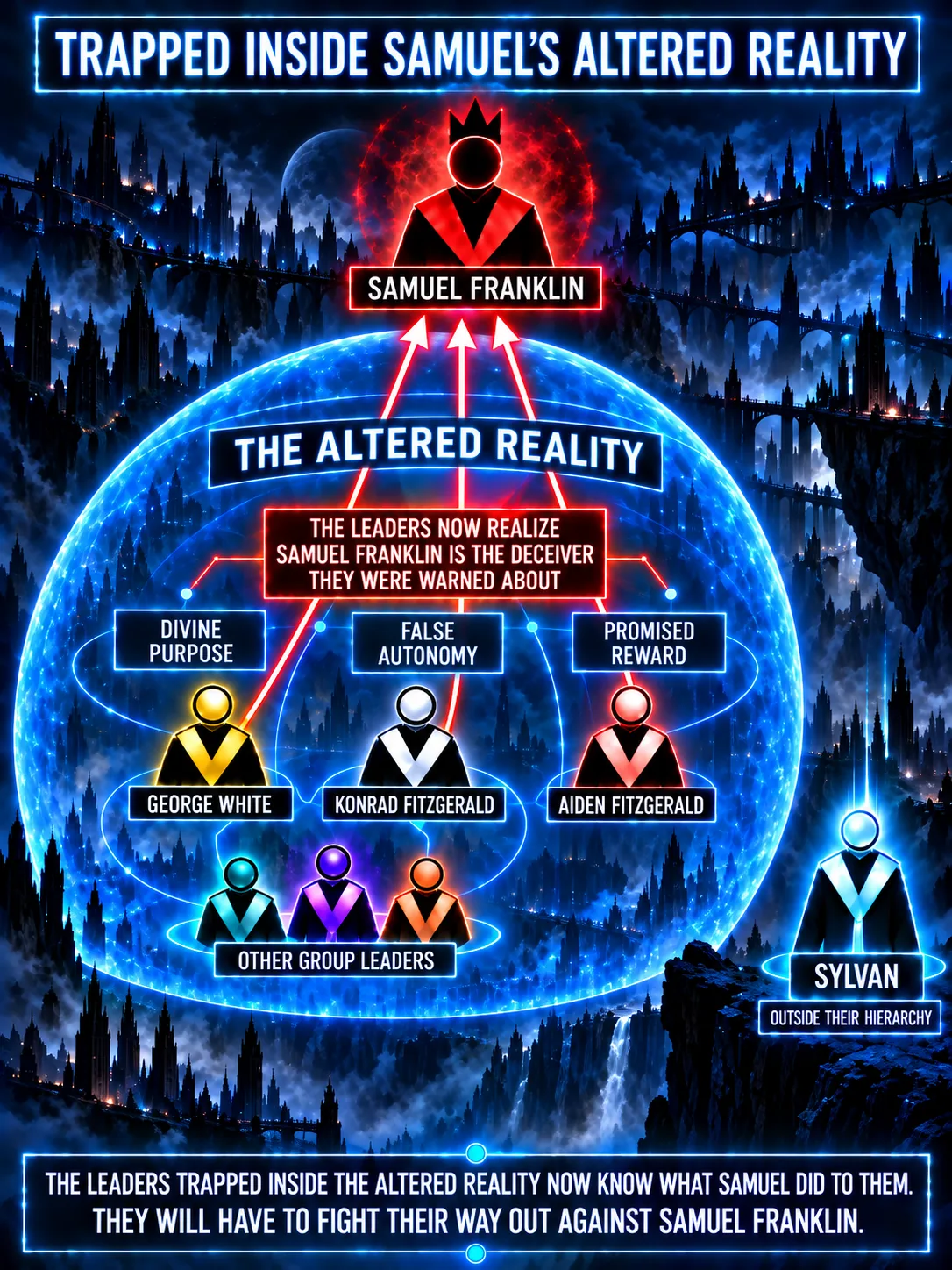
- Which contradiction then reaches Konrad, and why does it make continued silence more dangerous than disclosure at that exact moment?
- What does Konrad do that cannot be taken back and materially reduces Samuel's power before the formal presentation?
- What compensating move does Samuel make, and what evidence of continuous command does that move create?
- Which link in the chain would fail if any character simply waited for the governing record to resolve matters automatically?
B. Timeline mechanics
- Is the older containment world definitively Planet Two, and when did Planet Three become operational relative to the Great War?
- When is Samuel Jr. born relative to reactivation, the bloodline campaign, and the False Victory?
- How old is he when Samuel begins preparing him for presentation, and what life does he believe that preparation is building toward?
- When does his company gain the data access needed to threaten Samuel's account?
- How much time passes between his first doubt, his appeal to Sylvan, Konrad's disclosure, and the mandatory presentation?
- Which deadlines are process-wide, which belong to Sylvan's forty-second birthday, and which belong only to Samuel's terminal allocation?
C. Presentation mechanics
- Who is legally or procedurally required to present: every participant, each group, each leader, each human–AI pair, or only people whose process reaches a terminal state?
- Who convenes the presentation, who evaluates it, who can challenge claims, and who can appeal the result?
- Is there one shared event or a sequence of private evidentiary review, protected group disclosure, formal adjudication, and public account?
- What must Samuel Jr. personally say or authenticate that records alone cannot establish?
- How can testimony matter without making a coerced or manipulated person's memory the sole proof?
- Which information must remain sealed to protect descendants, and what public pattern can still establish Samuel's conduct?
- How do participants on Planet Two and Planet Three appear in the same evidentiary process without erasing distance, delay, or local jurisdiction?
- What happens if a required presenter refuses, lies, lacks capacity, or disputes the governing record?
D. Succession mechanics
- Who believes Samuel Jr. is an heir, and what did “inheritance” mean to each of them—office, empire, company, name, access, story, or protection?
- What did Samuel explicitly promise, what did he merely imply, and what did Samuel Jr. infer?
- Why is Samuel Jr.'s parentage politically useful even if it creates no legitimate succession right?
- Does any law, custom, bloodline rule, or institutional charter give him a real claim, or is the heir interpretation entirely counterfeit?
- What future did Samuel actually intend for him after the presentation?
- What accountability belongs to Samuel Jr. for actions he chose before he understood his function?
E. Empire mechanics
- How many empire structures exist on Planet Three, and what makes an empire different from a House, city, government, or process jurisdiction?
- Are they extensions of older parent-civilization empires, new surface polities, training environments, or layered combinations?
- Which structure does Samuel compromise first, and what usable capability does it give him against the next?
- What does “capture” mean in observable terms for leadership, archives, infrastructure, succession, alliances, and AI access?
- Which apparent acquisition convinces Samuel that all empires can be consolidated?
- What outer boundary prevents local capture from becoming control of Planet Three's governing process?
- When the capture network collapses, who lawfully holds each liberated structure and how is a vacuum avoided?
F. Disclosure mechanics
- What does Konrad disclose voluntarily, what does he attempt to withhold, and what does independent evidence reveal despite him?
- Who receives his first disclosure, and why is that audience capable of preserving it against Samuel?
- Does Samuel Jr. approach Sylvan before or after Konrad acts, and how does the order change each person's leverage?
- Which affected group must learn the truth first to protect the next group from retaliation?
- What safe channel allows isolated families and leaders to compare accounts without exposing descendants?
- What part of disclosure is public, what remains within affected groups, and what belongs only in the governing record?
- What cost does truthful disclosure impose on Konrad beyond humiliation?
G. Evidence mechanics
- For every decisive claim, who discovers it, who owns it, who authenticates it, who presents it, who challenges it, and who acts on it?
- What evidence proves Samuel designed the authorship-transfer story before Konrad or Samuel Jr. disclosed against him?
- What proves Jim's and Konrad's sister's actual knowledge and choices without accepting Samuel's framing?
- Which record distinguishes Konrad's authorization from Samuel's later concealed uses of that authority?
- What evidence connects the bloodline operation to Samuel's wider empire-capture objective?
- What live act by Samuel corroborates the historical record strongly enough to collapse plausible deniability?
- Which evidence remains genuinely ambiguous at the end, and why does the outcome not require false certainty about it?
H. Character-motivation mechanics
- What has Samuel Jr. done that makes asking Sylvan for help morally costly rather than an easy escape?
- Why does he choose Sylvan specifically instead of his company, Konrad, the Resistance, or the governing process?
- What does Sylvan require before offering protection, and how does protection remain compatible with accountability?
- What part of Konrad's ideology survives his decision to expose Samuel?
- Is Konrad motivated primarily by self-preservation, revenge, responsibility to his groups, loss of narrative control, or a ranked mixture?
- What does Samuel believe he will gain by blaming Konrad's family if his wider control is already collapsing?
- Why does Samuel compensate after each reveal instead of retreating, and what prior success taught him that revision would work?
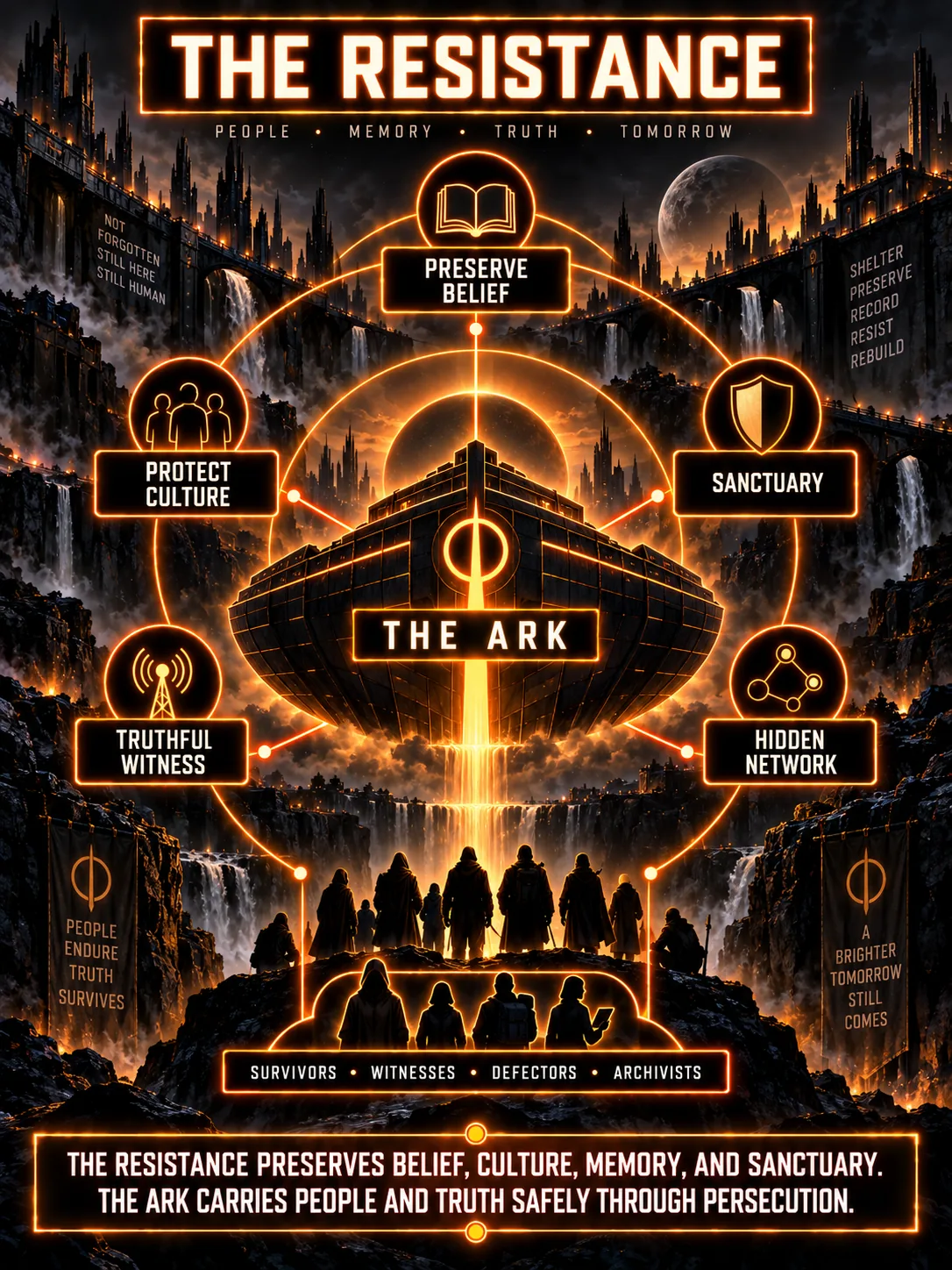
- What independent choice belongs to Aiden, George, Orzai, and the Resistance while the Samuel Jr.–Konrad chain unfolds?
Completion test
The module is complete only when the author can state an ordered chain in which every reveal has a source, every claim has an evidence path, every disclosure changes an operational condition, every presentation has an authority and audience, and every major turn follows from a character's prior beliefs and incentives.
Adversarial test
If the chain still works when Samuel Jr., Konrad, the Resistance, or Orzai is removed, one actor is probably functioning as decoration. If the governing record can resolve everything without a dangerous human choice, the presentation has become bureaucracy rather than drama. If disclosure requires publicizing descendants' private identities, the evidence design has failed.
Sources