Document metadata
type: workshop-module
status: open
module: EG-09
title: Define the existing prophecy
gate: What does the prophecy already mean before Samuel applies it to Sylvan?
prerequisites: EG-02
EG-09: Define the existing prophecy
Purpose
Build an original religious prophecy that predates Samuel and can be sincerely believed without making it a disguised copy of an Earth religion or a message Samuel secretly authored.
Established
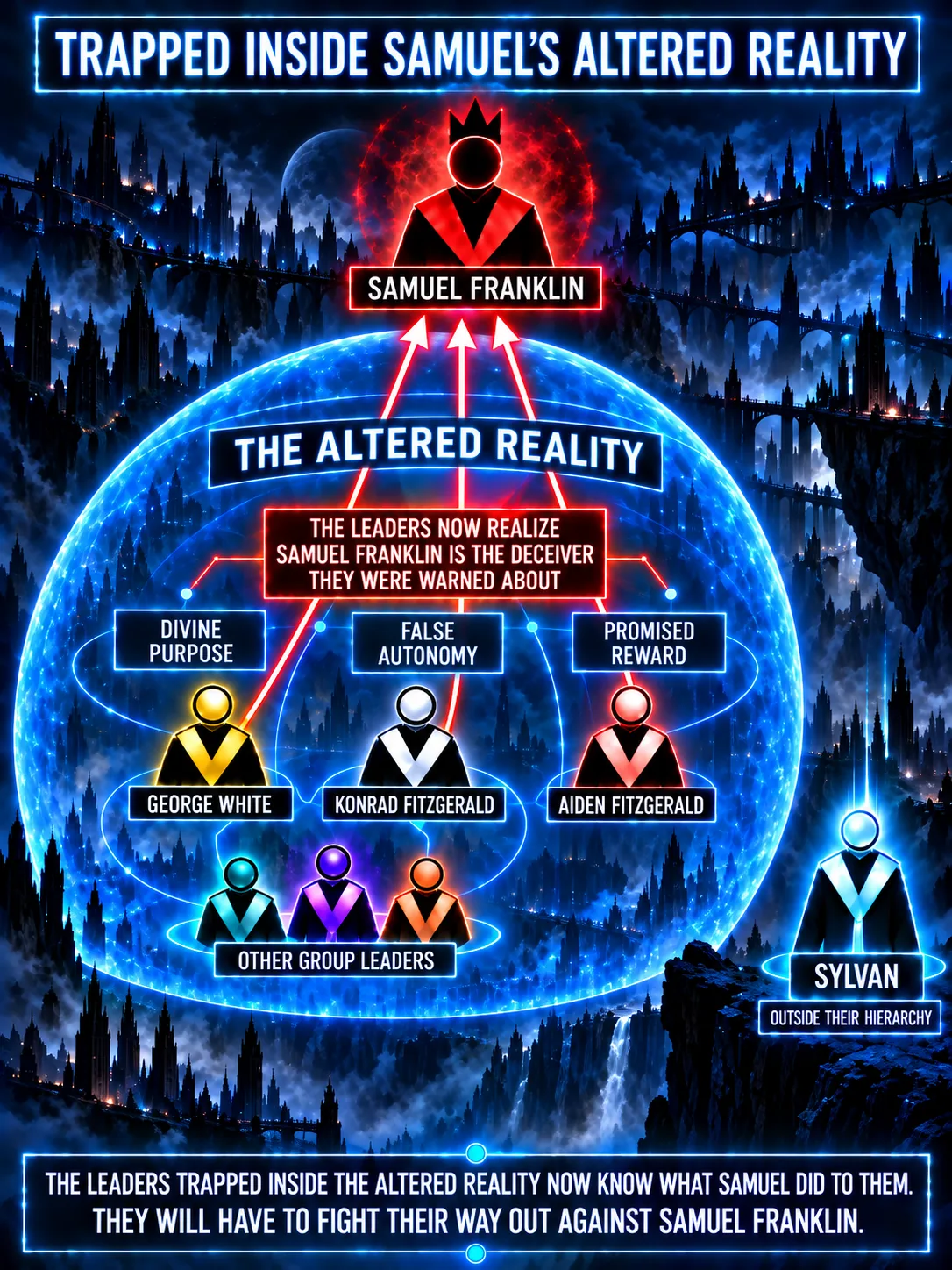
The prophecy belongs to an existing original religion in the reconstructed civilization. Konrad's group did not create it, and Samuel did not write it. Samuel later exploits ambiguity, interpretive authority, and the altered reality to claim that Sylvan is the enemy it describes.
The story does not need to decide whether the prophecy is metaphysically true. It must distinguish the text and tradition from Samuel's fraudulent application.
Source: 01 Sessions/Daily/2026-09-19 - Existing Prophecy Endgame Expansion.
Four possibilities
- Role prophecy: it warns of a future figure defined by actions rather than a name.
- Threshold prophecy: it concerns a dangerous transition that Samuel reframes as Sylvan's rise.
- Institutional prophecy: it warns that sacred authority will be captured, allowing Samuel to reverse the warning against its exposer.
- Paired reading: a familiar public interpretation and a suppressed reformist interpretation coexist before the endgame.
Central author gate
What does the existing prophecy say at the level of image, warning, and promised outcome; who preserved it; and which ambiguity lets Samuel falsely identify Sylvan without altering the prophecy itself?
Scene test
A sincere believer can explain the prophecy before Sylvan is named, and the explanation still makes sense after Samuel's fraud is exposed.
Adversarial test
If only Samuel knows or transmits the prophecy, it no longer feels existing. If it maps directly onto a real religion, the original-world boundary fails.