Document metadata
type: workshop-module
status: open
module: EG-11
title: Preserve leader agency in the attack
gate: What does each leader know, choose, order, and refuse when Sylvan is named as the target?
prerequisites: EG-10
EG-11: Preserve leader agency in the attack
Purpose
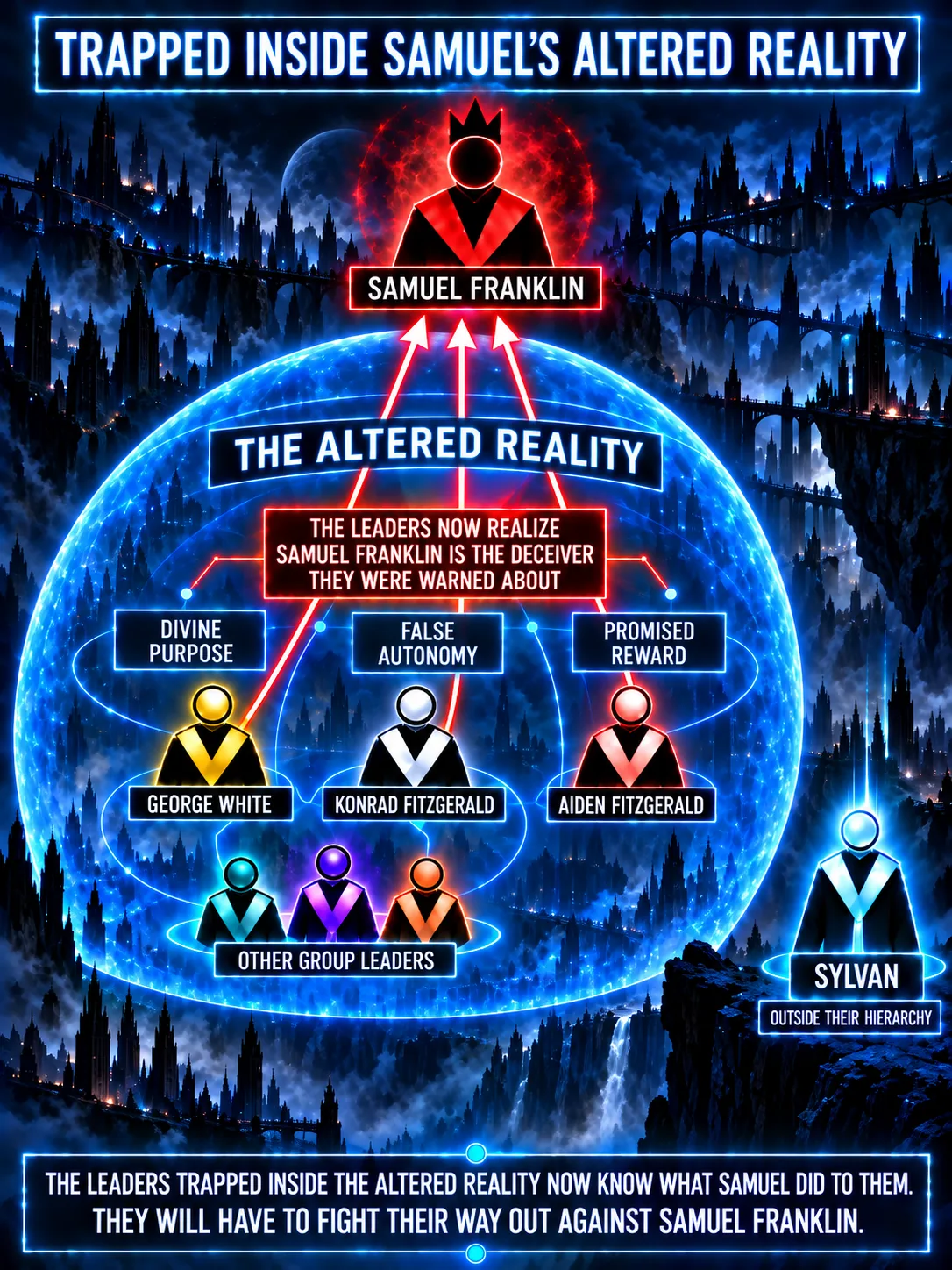
Show Samuel's control without erasing the responsibility, differences, and possible resistance of Konrad, Aiden, and the other group leaders.
Established
Samuel controls the interpretive environment and identifies Sylvan as the target. He does not control minds. Each leader still decides whether to believe the identification, investigate it, order action, protect followers, or refuse.
Konrad eventually commits himself and his groups to Sylvan's exposure plan. Aiden's independent response remains unresolved.
Source: 01 Sessions/Daily/2026-09-19 - Existing Prophecy Endgame Expansion.
Four possibilities
- Unequal knowledge: the leaders receive different fragments and therefore carry different responsibility.
- Escalation ladder: symbolic condemnation becomes surveillance, containment, and attempted elimination through separate choices.
- Internal dissent: one leader or believer requests independent verification before the attack.
- Competing loyalties: leaders must choose between Samuel's target assignment and visible harm to their own groups.
Central author gate
For Konrad, Aiden, and at least one other leader, what information is available, what action is chosen, what off-ramp is refused or accepted, and what consequence follows?
Scene test
No two leaders perform the same dramatic function, and Samuel's manipulation explains their context without excusing their decisions.
Adversarial test
If every attacker is a puppet, the moral and political conflict disappears. If Samuel's altered reality has no causal effect, his method is not dangerous.