Project Explorer

Seeds of the Throne

Seeds of the Throne began as years of conversations and thousands of story ideas. The Project Explorer shows how those ideas are being organized into characters, a world, a timeline, and a finished series.

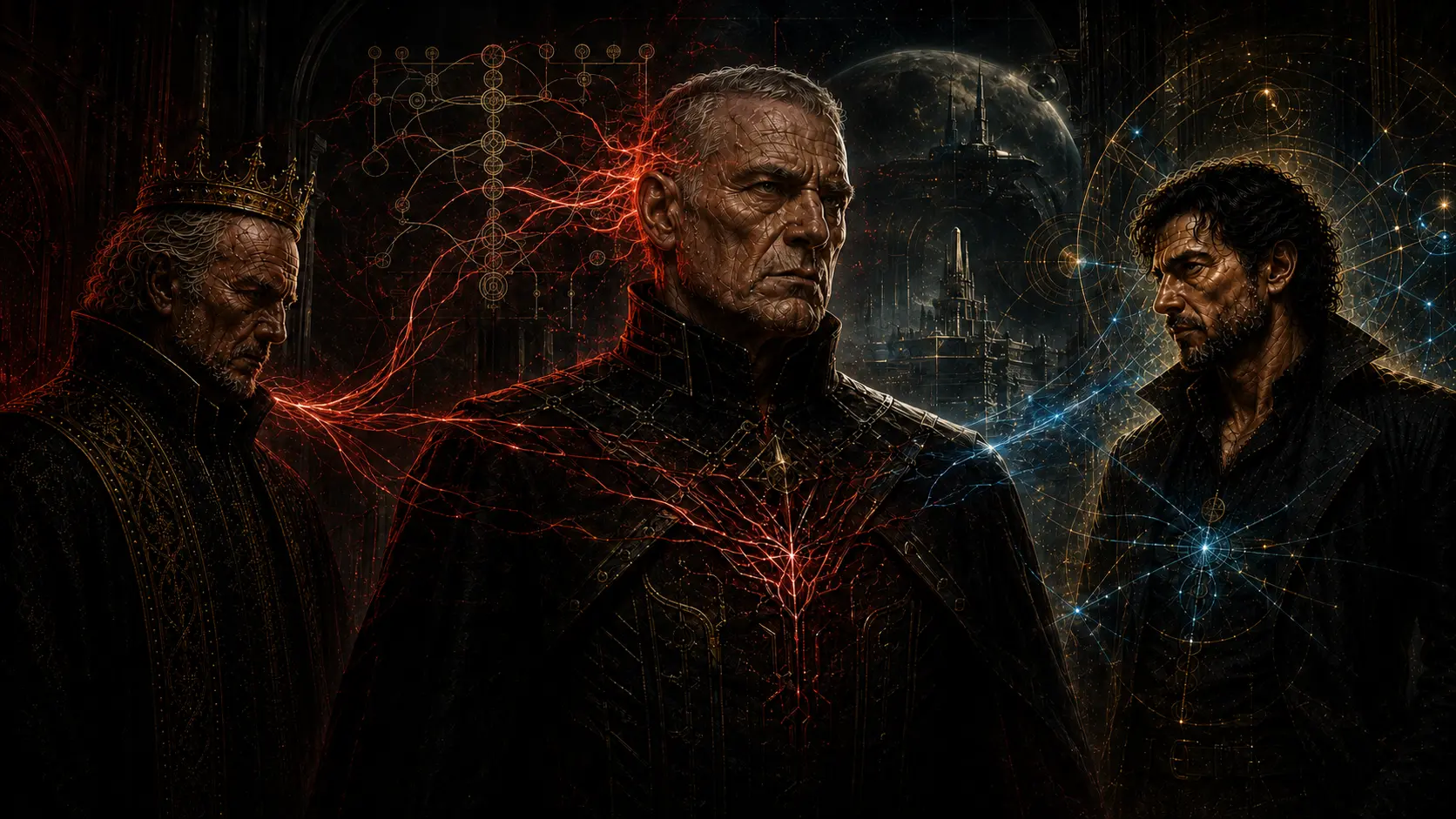
Konrad stands under Samuel's hidden red control while Sylvan observes from the clear opposing side.

Story development tools

The workshop helps the author complete the parts of the story that are still missing.

It explains one story problem, asks one clear question, offers different possible answers, and shows what each answer would change. The author makes the decision. The accepted answer is then added to the characters, timeline, world, and plot.

This is a public, read-only look at the real project, so it contains full spoilers. You can try the workshop, but your draft stays in this browser unless you export it.

  1. The author explains the story in ordinary language.

    The system records those ideas and separates confirmed decisions from suggestions and unanswered questions.

    Read how the system is designed
  2. The workshop asks one question at a time.

    Each question helps the author decide a missing cause, character choice, relationship, world rule, or event.

    Open a workshop question
  3. Accepted answers are added where they belong.

    An accepted decision can update character notes, the timeline, world rules, plot events, and the list of remaining questions.

    Review decisions and supporting information
  4. Use the completed plan to write and revise scenes.

    The planned system will create scene outlines, draft prose, check continuity, revise weak sections, and assemble the manuscript for the author's approval.

    Read the system plan

Seeds of the Throne is the working example. The notes, decisions, and workshop below are the live project, not a demonstration mockup.

Current story development

See what the story already has and what it still needs.

The system checks the whole story for missing causes, weak character decisions, unclear rules, and unfinished events. The results show the author what to work on next.

Current story premise

The colonization process trains participants and contains dangerous criminals.

Humanity developed the Luminai inside an interactive colonization environment. Sylvan and his Luminai are tested against Samuel Franklin, a criminal already held inside the containment process.

The current story problem Explain how Sylvan can expose Samuel while Samuel still believes he can regain control.

See how the story changed

9 / 27major story problems resolved

Current development pass33%
33%
Current sweep
Macro Shape
Current task
SC-010
  1. 01 Macro
  2. 02 Causal
  3. 03 Agency
  4. 04 Systems + evidence
  5. 05 Sequence
  6. 06 Scene map
  7. 07 Scene development
  8. 08 Draft

Story files

Browse the files used to develop the story.

Search 561 documents about the world, characters, plot, research, decisions, workshops, and earlier ideas.

Integration and Scoring

Integration levels describe how much of the hidden structure a person can access, participate in, or discuss. A person may understand above their authorized level, creating danger rather than freedom.

Everyone is scored relative to the conditions and influence they were given. Standing may carry across environments, eras, identities, or generations. Difficulty tiers permit different kinds of pressure without pretending every participant faced identical conditions.

Assessment and self-placement

The older leaders create an extensive assessment framework for newly trained human–Luminai pairs. It determines which roles and responsibilities a pair has demonstrated the qualifications to undertake. Actual path decisions and developed skills matter; raw output or integration depth alone cannot define qualification.

The framework opens credible placement paths. It does not arbitrarily assign the participant's future. The human and Luminai choose their own placement among the paths their record supports, with the human retaining responsibility for the consequential choice.

One of the most consequential paths can be a House or group with substantial resources and extensive involvement in the continuing colonization process. A pair that performs well enough may qualify for and choose this placement. The exact threshold, whether the House is created or entrusted, its membership rights, its resources, its authority, its obligations, its oversight, and whether the placement can later be changed or lost remain open.

Assessment establishes qualification for a role rather than human worth, moral superiority, or a permanent right to govern. A pair may qualify for several paths, including meaningful nonleadership work. Exact dimensions, evaluator independence, accommodation, review, appeals, revocation, and what happens when no preferred path is available remain unresolved.

Open: exact levels, scoring authority, assessment dimensions, appeals, carried standing, how options are presented, and whether participants ever see a score.