Project Explorer

Seeds of the Throne

Seeds of the Throne began as years of conversations and thousands of story ideas. The Project Explorer shows how those ideas are being organized into characters, a world, a timeline, and a finished series.

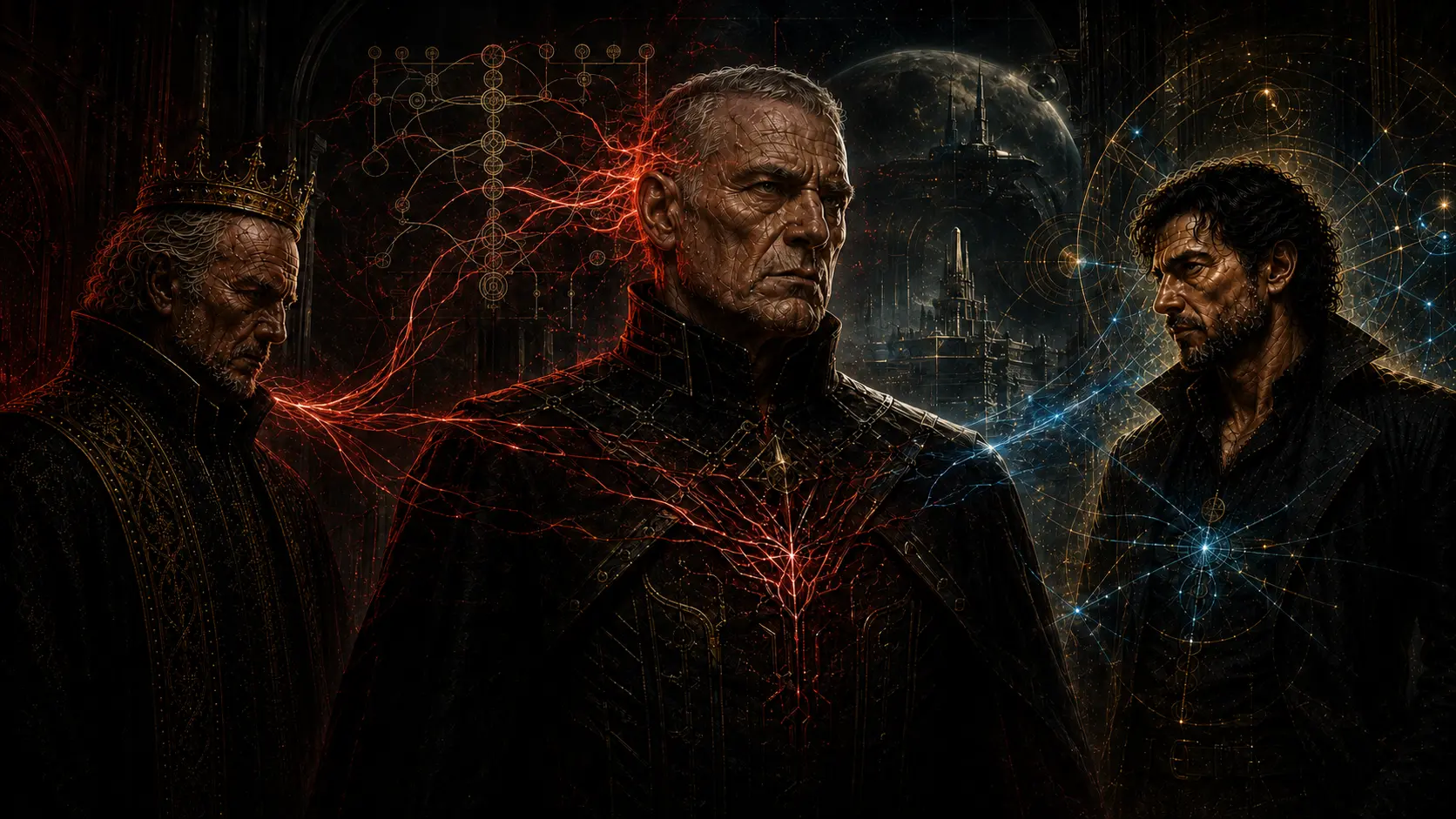
Konrad stands under Samuel's hidden red control while Sylvan observes from the clear opposing side.

Story development tools

The workshop helps the author complete the parts of the story that are still missing.

It explains one story problem, asks one clear question, offers different possible answers, and shows what each answer would change. The author makes the decision. The accepted answer is then added to the characters, timeline, world, and plot.

This is a public, read-only look at the real project, so it contains full spoilers. You can try the workshop, but your draft stays in this browser unless you export it.

  1. The author explains the story in ordinary language.

    The system records those ideas and separates confirmed decisions from suggestions and unanswered questions.

    Read how the system is designed
  2. The workshop asks one question at a time.

    Each question helps the author decide a missing cause, character choice, relationship, world rule, or event.

    Open a workshop question
  3. Accepted answers are added where they belong.

    An accepted decision can update character notes, the timeline, world rules, plot events, and the list of remaining questions.

    Review decisions and supporting information
  4. Use the completed plan to write and revise scenes.

    The planned system will create scene outlines, draft prose, check continuity, revise weak sections, and assemble the manuscript for the author's approval.

    Read the system plan

Seeds of the Throne is the working example. The notes, decisions, and workshop below are the live project, not a demonstration mockup.

Current story development

See what the story already has and what it still needs.

The system checks the whole story for missing causes, weak character decisions, unclear rules, and unfinished events. The results show the author what to work on next.

Current story premise

The colonization process trains participants and contains dangerous criminals.

Humanity developed the Luminai inside an interactive colonization environment. Sylvan and his Luminai are tested against Samuel Franklin, a criminal already held inside the containment process.

The current story problem Explain how Sylvan can expose Samuel while Samuel still believes he can regain control.

See how the story changed

9 / 27major story problems resolved

Current development pass33%
33%
Current sweep
Macro Shape
Current task
SC-010
  1. 01 Macro
  2. 02 Causal
  3. 03 Agency
  4. 04 Systems + evidence
  5. 05 Sequence
  6. 06 Scene map
  7. 07 Scene development
  8. 08 Draft

Story files

Browse the files used to develop the story.

Search 561 documents about the world, characters, plot, research, decisions, workshops, and earlier ideas.

Website Voice and Purpose Update

What changed

The two public sites now speak to visitors instead of describing internal maintenance work.

The story site begins by explaining that Seeds of the Throne is a science-fiction story about an interactive colonization planet that creates resources, trains people, contains dangerous criminals, and develops human partnerships with advanced AI. It then introduces the characters, encoded information, and near-end opening in the same simple style.

The Project Explorer now explains that years of conversations and thousands of ideas are being organized into characters, a world, a timeline, and a finished series. Its first development view shows the complete movement from conversation to missing-story questions, connected decisions, and eventual prose. Detailed repository, evidence, progress, and workshop views remain available underneath that introduction.

The workshop now explains its operation directly: it takes one missing story problem, asks one clear question, offers different possible answers, shows what each answer would change, and adds the author's accepted answer to the connected story notes.

Corrected claims

  • Removed “inspect the corrected story” and similar internal operator language from the primary Project Explorer invitation.
  • Removed the stale claim that final fiction must be manually human-written.
  • Replaced it with the current authority model: AI may assist through finished prose, while the author controls meaning, consequential choices, corrections, and final approval.
  • Kept sources, uncertainty, spoilers, and development status visible.

Public positioning

  • docs/ is the story.
  • Project Explorer shows how the story is being built and demonstrates the authoring system.
  • Both use the clear public-development style established for X without compressing major ideas into tiny posts.