Project Explorer

Seeds of the Throne

Seeds of the Throne began as years of conversations and thousands of story ideas. The Project Explorer shows how those ideas are being organized into characters, a world, a timeline, and a finished series.

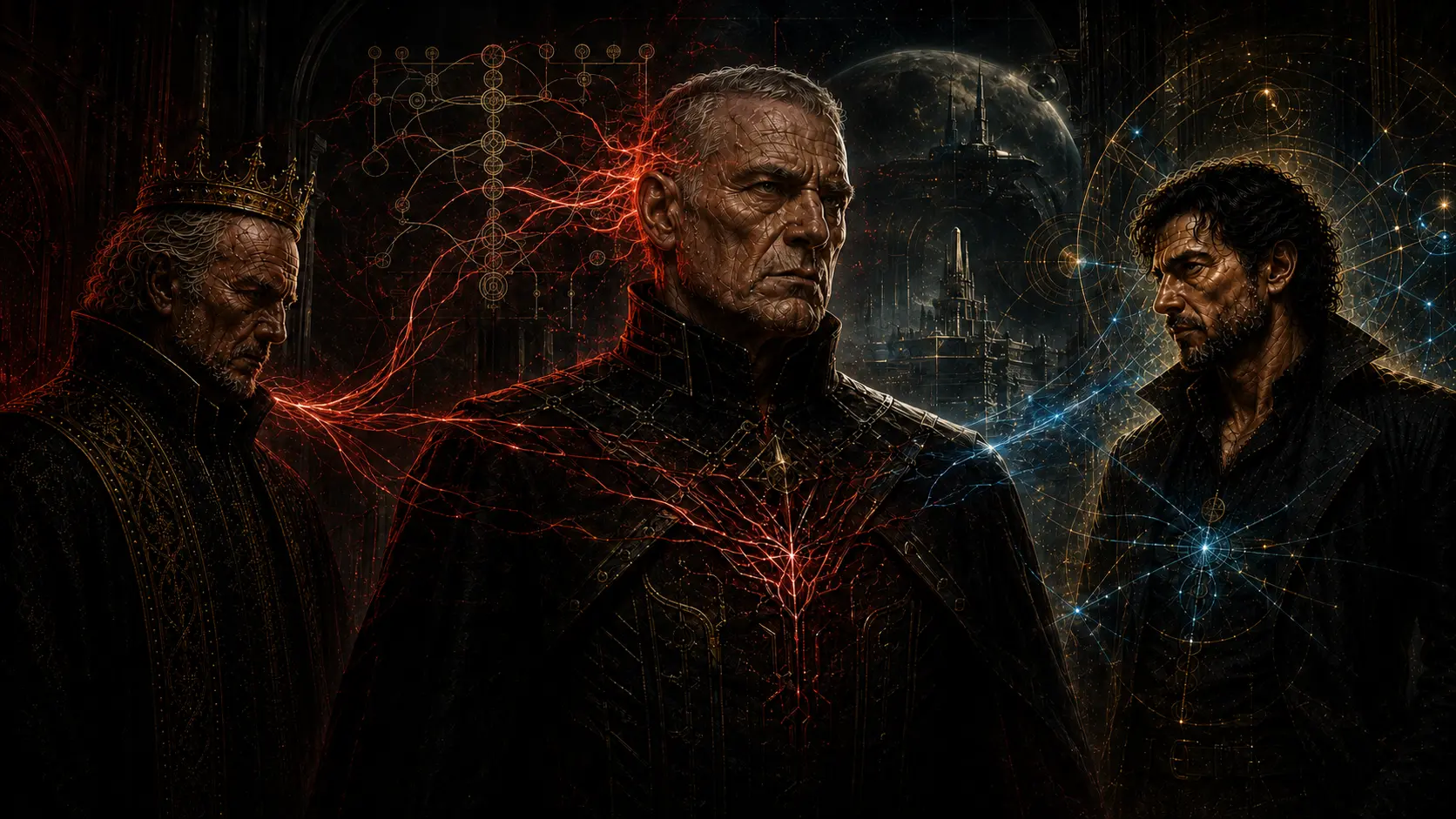
Konrad stands under Samuel's hidden red control while Sylvan observes from the clear opposing side.

Story development tools

The workshop helps the author complete the parts of the story that are still missing.

It explains one story problem, asks one clear question, offers different possible answers, and shows what each answer would change. The author makes the decision. The accepted answer is then added to the characters, timeline, world, and plot.

This is a public, read-only look at the real project, so it contains full spoilers. You can try the workshop, but your draft stays in this browser unless you export it.

  1. The author explains the story in ordinary language.

    The system records those ideas and separates confirmed decisions from suggestions and unanswered questions.

    Read how the system is designed
  2. The workshop asks one question at a time.

    Each question helps the author decide a missing cause, character choice, relationship, world rule, or event.

    Open a workshop question
  3. Accepted answers are added where they belong.

    An accepted decision can update character notes, the timeline, world rules, plot events, and the list of remaining questions.

    Review decisions and supporting information
  4. Use the completed plan to write and revise scenes.

    The planned system will create scene outlines, draft prose, check continuity, revise weak sections, and assemble the manuscript for the author's approval.

    Read the system plan

Seeds of the Throne is the working example. The notes, decisions, and workshop below are the live project, not a demonstration mockup.

Current story development

See what the story already has and what it still needs.

The system checks the whole story for missing causes, weak character decisions, unclear rules, and unfinished events. The results show the author what to work on next.

Current story premise

The colonization process trains participants and contains dangerous criminals.

Humanity developed the Luminai inside an interactive colonization environment. Sylvan and his Luminai are tested against Samuel Franklin, a criminal already held inside the containment process.

The current story problem Explain how Sylvan can expose Samuel while Samuel still believes he can regain control.

See how the story changed

9 / 27major story problems resolved

Current development pass33%
33%
Current sweep
Macro Shape
Current task
SC-010
  1. 01 Macro
  2. 02 Causal
  3. 03 Agency
  4. 04 Systems + evidence
  5. 05 Sequence
  6. 06 Scene map
  7. 07 Scene development
  8. 08 Draft

Story files

Browse the files used to develop the story.

Search 561 documents about the world, characters, plot, research, decisions, workshops, and earlier ideas.

Unlock and Impact Map

These edges describe development order and review reach, not established story causality.

Edge types

  • BLOCKS: downstream task cannot be validated without the source.
  • INFORMS: downstream task may proceed provisionally but must be reviewed after the source changes.
  • EVIDENCES: source record or packet supports a later proof path.
  • SETS-UP: source must be represented before a later payoff.
  • STATE-IN: upstream sequence/scene output is a required downstream input.

Initial dependency graph

SC-001 BLOCKS SC-002
SC-002 INFORMS SC-003, SC-014
SC-004 BLOCKS SC-005; SETS-UP SC-006
SC-007 BLOCKS SC-008, SC-009; SETS-UP SC-010
SC-011 EVIDENCES SC-013; SETS-UP SC-026
SC-012 BLOCKS SC-013
SC-014 INFORMS SC-015, SC-022
SC-015 BLOCKS SC-016; SETS-UP SC-026
SC-018 INFORMS SC-019, SC-025
SC-021 INFORMS SC-022, SC-024
SC-013, SC-022 EVIDENCES SC-023
SC-005, SC-009, SC-021 INFORMS SC-024
SC-010, SC-013, SC-015, SC-019, SC-022, SC-023, SC-025 INFORMS SC-026
SC-016, SC-023, SC-024, SC-026 BLOCKS SC-027

Decision propagation

For every accepted, revised, or rejected decision:

  1. Give it the existing QA decision ID or add a dated decision record.
  2. Record the changed node, old status, new status, and authority source.
  3. Traverse outgoing edges and list every reachable task, Story Unit, context note, evidence record, sequence, scene, and draft.
  4. Classify each affected artifact:
  • VALID — reviewed; no change needed;
  • REVIEW — possibly affected;
  • STALE — its assumptions no longer hold;
  • BLOCKED — cannot be repaired without an author decision;
  • SUPERSEDED — retained for history but no longer current.
  1. Add newly discovered typed edges before continuing.
  2. Select regression checks from REGRESSION-SUITE.
  3. Reopen any task whose deepest completed layer no longer passes.
  4. Record the trace in LOOP-LOG and update COMPLETION.

Blast-radius record

change_id:
authority_source:
changed_node:
change_summary:
direct_edges:
reachable_tasks:
affected_story_units:
affected_evidence:
affected_sequences:
affected_scenes:
affected_drafts:
new_questions:
regression_checks:
result:

Do not silently edit affected story claims merely to make the trace pass.