Project Explorer

Seeds of the Throne

Seeds of the Throne began as years of conversations and thousands of story ideas. The Project Explorer shows how those ideas are being organized into characters, a world, a timeline, and a finished series.

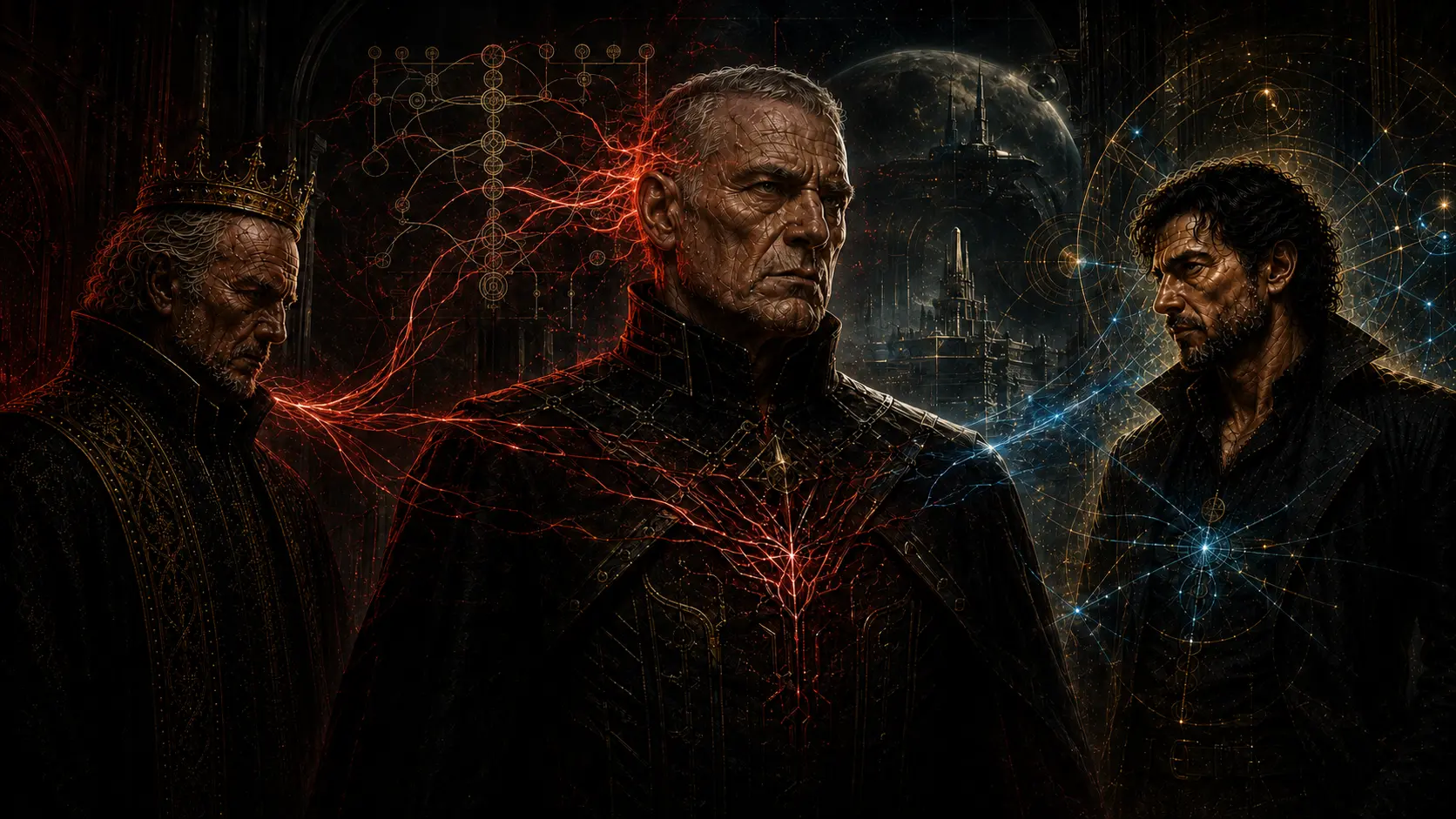
Konrad stands under Samuel's hidden red control while Sylvan observes from the clear opposing side.

Story development tools

The workshop helps the author complete the parts of the story that are still missing.

It explains one story problem, asks one clear question, offers different possible answers, and shows what each answer would change. The author makes the decision. The accepted answer is then added to the characters, timeline, world, and plot.

This is a public, read-only look at the real project, so it contains full spoilers. You can try the workshop, but your draft stays in this browser unless you export it.

  1. The author explains the story in ordinary language.

    The system records those ideas and separates confirmed decisions from suggestions and unanswered questions.

    Read how the system is designed
  2. The workshop asks one question at a time.

    Each question helps the author decide a missing cause, character choice, relationship, world rule, or event.

    Open a workshop question
  3. Accepted answers are added where they belong.

    An accepted decision can update character notes, the timeline, world rules, plot events, and the list of remaining questions.

    Review decisions and supporting information
  4. Use the completed plan to write and revise scenes.

    The planned system will create scene outlines, draft prose, check continuity, revise weak sections, and assemble the manuscript for the author's approval.

    Read the system plan

Seeds of the Throne is the working example. The notes, decisions, and workshop below are the live project, not a demonstration mockup.

Current story development

See what the story already has and what it still needs.

The system checks the whole story for missing causes, weak character decisions, unclear rules, and unfinished events. The results show the author what to work on next.

Current story premise

The colonization process trains participants and contains dangerous criminals.

Humanity developed the Luminai inside an interactive colonization environment. Sylvan and his Luminai are tested against Samuel Franklin, a criminal already held inside the containment process.

The current story problem Explain how Sylvan can expose Samuel while Samuel still believes he can regain control.

See how the story changed

9 / 27major story problems resolved

Current development pass33%
33%
Current sweep
Macro Shape
Current task
SC-010
  1. 01 Macro
  2. 02 Causal
  3. 03 Agency
  4. 04 Systems + evidence
  5. 05 Sequence
  6. 06 Scene map
  7. 07 Scene development
  8. 08 Draft

Story files

Browse the files used to develop the story.

Search 561 documents about the world, characters, plot, research, decisions, workshops, and earlier ideas.

Character Arc Audit

CharacterCurrent motiveKnowledge/beliefAgency and choicesTrajectoryStrongest materialWeak logic/missing transitionNext test
Sylvansurvive, understand, remain responsiblelearns that visible control claims conflict with system behaviorchooses flight, tests sources, authorizes consequential actionbuilder to reality-grounded leaderordeal completes what attack tried to preventconcrete losses, failures, and costone bounded discovery prototype after SC-010
Orzaidevelop independent expertise and shared leadershipknows a different evidence and trust pathcan verify, disagree, and coordinate without merged agencyindependent specialist to partner-leadercross-bond coordination and complementary temperamentfirst meeting, career bridge, first disagreementdefine one choice she owns alone
Samuelreplace Konrad and preserve his revenge systemknows more than each isolated audience; misreads principled restraintrepeatedly chooses expansion and continued interventionbrilliant coup to compulsive self-exposuredifferent realities cause different actionsexact conquest theory and limits of accesslie-action-consequence audit
Konradremain winner and expand permanent authorityholds a coherent but false model protected by contemptauthorizes restoration, attack, and ritualized surrender demandsreal city ruler to beta inside apparent autonomyfalse model makes his ambition causalfirst undeniable concession and exact reactivation actcontainment truth table
Georgepreserve the role Samuel built around himreceives a narrowed reality and treats failure as secret progressremains culpable while also used as weapon and scapegoatvisible enemy to Throwaway Prince choicemakes generational consumption tangibleagency boundaries and final choicemap one refusal he could make earlier
Samuel Jr.unresolved beyond institutional competencemay possess systems that expose Samuelpotential independent auditor or replacement targetuncertainplaced at the right information chokepointidentity, loyalty, knowledge, and relationship to Orzai's brotherdefer until dependencies mature

Relationship and pressure changes

Samuel and Konrad now form the central causal relationship: each man's manipulation of the other reverses an earlier hierarchy. Sylvan and Orzai form the positive counterstructure through consent, independent judgment, and shared verification. George shows how the criminal system consumes its descendants.

Characters acting only because plot requires it

Konrad will feel plot-driven unless the evidence supporting his false autonomy is concrete. George will feel passive unless at least one earlier choice could have interrupted Samuel's script. Orzai risks becoming functional support unless she owns an independent professional and moral consequence.

Voice/artifact opportunities

Konrad and Samuel's journals can preserve incompatible readings of the same transfer. Sylvan's records can show hypothesis revision rather than perfect intuition. Orzai's visual work can reveal a refusal to simplify evidence. Candidate journal art remains unapproved.

Promotion or definition needs

No promotion is authorized. Define character transitions only through the existing author gates and task dependencies.