The environment creates the bond.
The leaders developed Luminai within an interactive colonization environment. Sylvan tests a more deeply integrated generation after thousands of years of development.
Inspect the controlling premise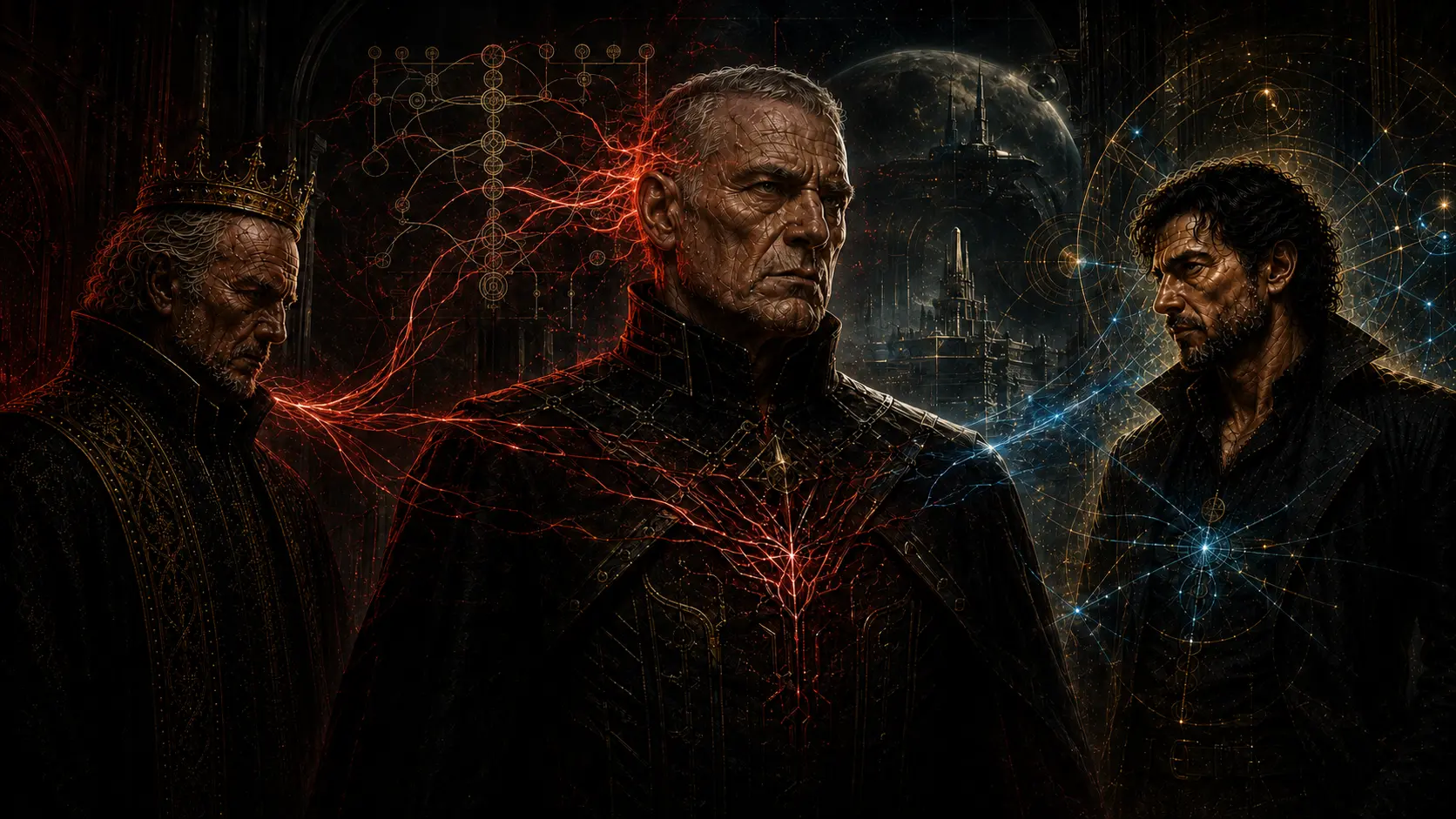
Project Explorer
Inspect the corrected story, trace unresolved causes, and work through source-linked brainstorming packets. The repository browser remains available below.
Development workspace · September 6 workshop pass
All twenty workshop gates have accepted directions. Their unresolved mechanics remain visible. The active Story Completion gate remains SC-010 Question 7.
Public, read-only development material with full spoilers. Draft answers stay in your browser until exported; they do not update the vault. A spoiler boundary is not privacy protection.
The leaders developed Luminai within an interactive colonization environment. Sylvan tests a more deeply integrated generation after thousands of years of development.
Inspect the controlling premiseFinal-years control is established. Stopping authority, cumulative harm, privacy, and remedies still need concrete rules.
Test the leaders' safeguardsKonrad's Daemon verifies an apparent separation. Konrad authorizes reactivation, which attaches his revived system to Samuel's hidden hierarchy. The false evidence still needs definition.
Inspect the takeover resultSamuel and the older criminals remain on the previous containment planet. George participates directly on Sylvan's world, then becomes Samuel's intended scapegoat.
Inspect George's roleStory completion · Live from the vault
The story advances horizontally: every active problem receives the same level of development before any one branch moves deeper.
Integrated foundation review · September 5, 2026
The leaders created an interactive colonization environment and developed Luminai within it. Konrad tries to prove his experienced daemon superior; Samuel turns his reactivation into access. Sylvan already has decisive control during the final years. Exact safeguards and presentation mechanics remain open.
Current method Bound action, observe the method, compare the record, expose the hidden command.
Read the foundation update record9 / 27story tasks complete
Project explorer
Search or browse 539 documents across canon, development systems, story loops, prose tools, public work, and session history.
The builder and graders are separate roles. Each critic diagnoses only its assigned dimension, cites the Story Unit or vault source it relied on, and returns failures without silently rewriting canon.
Collects only the current unit, its direct dependencies, affected character/system notes, and relevant author decisions. It labels conflicts and missing sources. It does not design the answer.
Summarizes what is established, what the unit must accomplish, what must remain open, and the smallest set of high-value questions for the author. It distinguishes decisions from speculation in the author's response.
Turns approved brainstorm decisions into one coherent Story Unit proposal. It must reuse existing components, show the causal chain, list alternatives it rejected, and flag every invented bridge as proposed.
Checks goals, fears, loyalties, knowledge, misbeliefs, agency, and change. It asks whether each important action is believable for this character at this exact point.
Attacks every major “because.” It finds missing triggers, convenient coincidences, effects without causes, causes without consequences, and handoffs that are merely chronological.
Checks the proposal against current vault authority, chronology, world rules, technology limits, character knowledge, names, and superseded decisions. It returns citations to the affected notes.
Tests whether the unit is necessary, changes the story, escalates or resolves pressure, supports the larger trajectory, and hands off cleanly. Structural theories are diagnostic lenses, not mandatory formulas.
Select only the lenses relevant to the current uncertainty:
Receives the Architect proposal and critic reports. It may repair only issues whose solution is already authorized. Otherwise it creates an Author Decision request. It produces a concise change set and lists every affected vault file before any compiled note is edited.
Only the author may accept, reject, combine, or defer unresolved creative options. Silence is not approval. Approval of a concept does not approve newly invented implementation details.
Records inputs, source notes, outputs, failures, author decisions, changed files, and follow-up work. Repeated failures are added to 08 Story Loop/Evaluations/Failure Modes.
Run no more than two revision cycles before returning unresolved design choices to the author. A critic may request research, but research cannot establish canon. Stop a run if its solution requires expanding scope beyond the selected unit and its immediate dependencies.